
Passive Income Ideas: how to create an online course to sell
Spoiler Alert: Passive income through courses is a myth. Run if someone tells you that they’ve got passive income ideas and they include courses. If you think I’m full of shit, go ahead and read how to create evergreen courses.
There are a lot of things that beginning course creators get wrong. Regardless of whether you think passive course income is real or not, the biggest mistake I see beginners make is not asking:
Is a course actually a good fit for my business and where does it fit?
There are a lot of gurus out there promising to help you make six figures in six weeks just by packaging your expertise.
And that's honestly a load of crap.
Unless you already have a big audience or a big name, and even then, it's not actually about packaging expertise.
Because when you package expertise, what you tend to get is a book, not a learning experience. And while you can learn things from books, there needs to be active engagement with the information and applying it.
So when does a course actually work in a business (not just as a list of passive income ideas)?
People buy courses because they want to change something, and they want to change it through learning.
Courses can't just be content repositories because nobody learns by just pouring information into their head. That means courses work in a business when you actually have things that they can do in order to apply the information for that change.
Courses work when they have a strategic job in your business ecosystem, and there are a few pretty typical situations where a course would work well.
As a Lead Generator.
This is a short, quick win that people can get with you. It's like your micro course. It can also be the thing that's preparing them to work with you.
As your Core Offer.
It can also work if you have a lot of expertise in something and you're looking to help people learn something that's either self-paced or in a cohort.
Caveat: But I've said this before and I'll say it a million times. Expertise equals amnesia. And so you forget what it's like to be a beginner. So it's not that it's not possible, it's that if you want an evergreen course or a live course, you really have to break down the steps to help them get to wherever it is they're trying to go.
As a Complement to One-to-One work.
Whether that's you're trying to send them on side quests to do something specific for them, or to have something to bring to your next call, or whatever it happens to be. Those things can be built as a learning experience that's applicable to more than one person. So they might need extra support in one particular thing.
What makes something a course and not just one-on-one work in this situation is that all courses are based around activities and information that work no matter who is taking it. That's the piece that makes something teachable in a group setting.
Courses work when you’re teaching something teachable
It's that shared goal. The "I'm trying to write a welcome email sequence.” It's that shared goal that makes it an actual learning experience, that makes it an actual course.
These are the patterns that you're seeing. Maybe everybody struggles with coming up with a course topic, or maybe everybody struggles with, well, how do I actually validate this idea?
Those are the things that are prime real estate for becoming a course. And that's why it's so important to already know the people that you're trying to help.
Because we're looking for patterns. We're looking for the thread that ties all of the people together in order to create a course that works for them, works for us, and is going to fit in our business.
A course can also work if clients need support after your one-on-one services or other work that you're doing with and for them. But that pattern aspect of it still applies.
And none of this is to say that standalone courses don't work. They can, but the available technology really hinders us. Most standalone courses need to have some other aspect of accountability in order to work well, unless there are those micro courses.
When is a course not a good idea for your business?
When one person says to you, “have you ever thought of offering a course on,” that's not really a reason to jump in and get started without fully validating the idea with other people. Trust me, I have made that mistake.
And another situation, that might seem contradictory, is that if you haven't worked on this thing with others and nobody has asked you for it, then you're really not ready for a course.
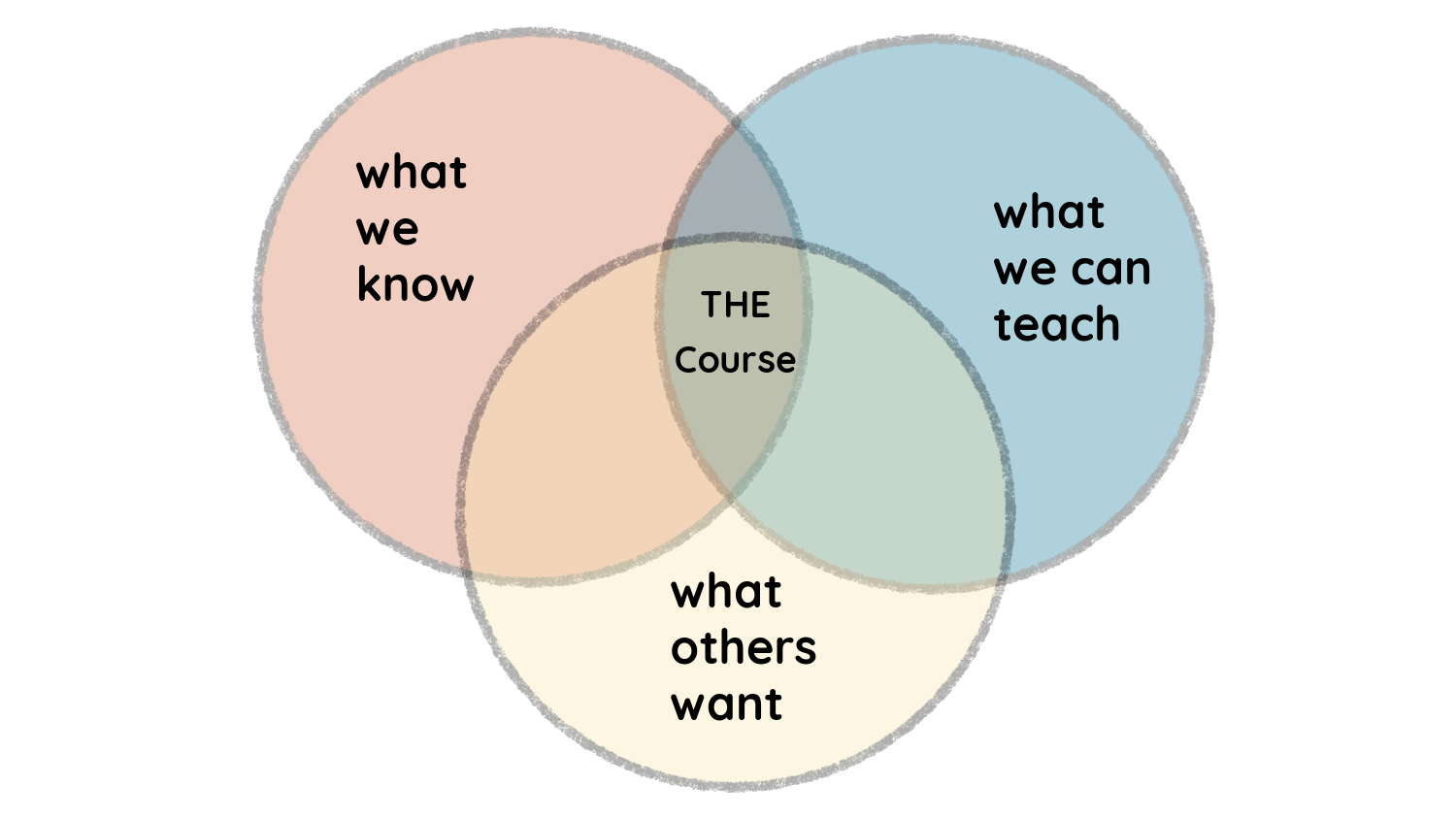
A course is a good idea when we find there's an overlap between what we know, what we want to teach, and what others want from us. And so if you're not getting signals from all three of those areas, then you may want to rethink whether or not this is a good move for your business.
If you want help figuring that out, it’s exactly what we do in my Course Jumpstart Challenge.
How to create an online course to sell
Okay, so let's imagine that your business does fit one of the categories. How do we actually get from idea to our first sale?
But do they really want it? Second level validation.
When you have that first "what if I did a course on" idea, you want to do a little bit more digging. Not really into what you want to teach (although most initial topic ideas tend to be too broad), but instead into what can help you narrow it down is digging into what others want and what they need.
Because you can have a bajillion modules, but if you haven't figured out who you're teaching, when you're teaching, and how you're teaching, it's not going to go very well. That means doing market research, but not doing it in the traditional way that marketers tell you to do market research. You need to be talking to people not just as buyers, but as learners.
So I like to call it doing learner research, because we learn about who they are, what their goals are, and how they like to learn. And all of that information can help us market the course, but the reverse is very rarely true. Our traditional market research of where are you right now, right, those things don't necessarily help us build a course that's going to help our people learn.
Is that really the issue? Getting to the root of the problem.
When people invest in courses, they want to be successful. They want to learn the thing that they are coming to learn in order to reach a goal.
So after you write the kind of learner research questions and validate the idea, then you establish why is this a problem? And that comes from both a combination of your own experience and also what you've heard from them.
What is the result? Outcomes driven course design.
Then you write some outcomes. And we're not talking bullshit "they'll understand how to" kind of outcomes. We're talking concrete, specific, articulable outcomes. What will they actually be able to do?
How do we get there?
After the outcomes, you build out the steps, tasks, and activities. A lot of beginners start with the content. This is the information that I know that I know they need to know. That's building from a place of "this is the knowledge I want to share" instead of "this is the thing I want to help them do or accomplish."
If we only focus on knowledge, then our clients aren't going to get what they need.
What do they need to know?
Okay, so after you have those things (the steps, the tasks, the activities) then you figure out what content they need to be able to do those things, right. This is one of the ways that you can prevent that course bloat that so many people have.
A map that saves time and energy.
Then you pull all of these pieces into acourse mapthat tells you when what is happening and what you need to do. But it also explains the why.
The why is a key piece that beginners also often miss; it’s giving the reasons behind everything you're asking them to do. Why are they watching this video? Why are they doing this activity? Why are they going and standing on their head?
All of those things need an explanation and a connection, right. How is this thing building on what we've done and getting us to where we're going?
Because all learners, but especially adult learners, need to see a connection between what they're trying to learn and their own personal experience. Frankly, adults are busy, but also when you’re learning, you encode information better when you have something that you're building off of. So that connection is really important.
When it's not there, things start to feel like busywork. And then you have folks that aren't implementing, aren't doing the things.
How do we know we're not wasting our time?
How do we know for sure we're not jumping into something where we're wasting a bunch of time and energy, or it's not going to get our people results?
A lot of it comes down to assumptions. We often have assumptions about what our learners need, assumptions about how much they already know. It really comes down to assuming instead of designing for what we actually know.
That means doing the learner research multiple times. It involves, when you're actually in the course, getting feedback multiple times. And if that sounds like a lot of work, it's because it is. That's really what it takes to do this well and not end up having to recreate a new course every six months because the one that you've got stopped selling or never did in the first place.
If you’re not sure if it’s a good idea, I have a quiz that's called the"Is a Course Right for Your Business?" quiz. It'll give you a little bit of direction about whether or not you have something that's really worth building. And you don't have to do this with me, but I will tell you if you are or not ready.
I’m also happy to chat through ina strategy session if you just want to get straight to the point.