
Are Online Courses Dead in 2026? Only the Bad Ones
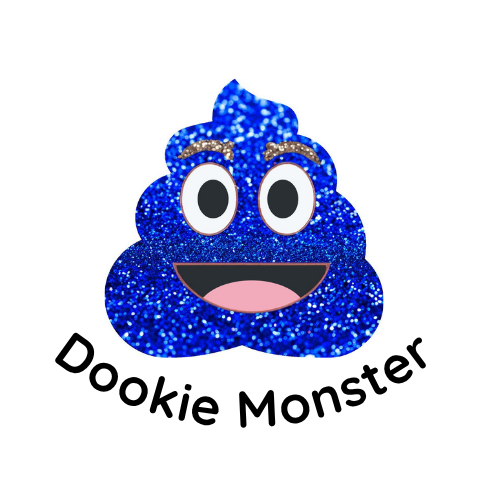
Shitty courses wrapped in fancy marketing represented by the poop emoji covered in glitter called “Dookie Monster”
If your course isn't selling, the problem may not be “the market.” It might be your course.
A lot of people still want to learn online, but they are done paying for glorified video vaults that never help them reach the goal they bought them for. That shift matters, especially if you've been told that weak sales are only about the economy or your audience getting stingy.
The problem isn’t that buyers stopped wanting growth. The problem is that information delivery does not equal learning, and buyers have finally figured that out. Let’s do a little look back to see how we got here.
Why Online Course Buyers Feel Burned (How "Course" Became a Dirty Word)
The word course has picked up some baggage online, and not by accident. For years, people sold a paywalled YouTube, tossed in a few PDFs, and called it a transformation. Then buyers started comparing notes.
Course buyers are more savvy now, which makes sales hard for everyone. They have stacks of courses they bought that they never finished or never got results from. Some of those courses were free. Some were premium (super premium). The pattern stayed the same.
A lot of buyer frustration comes down to a few familiar problems:
They didn't finish the course.
They didn't reach the goal they paid for.
They felt more confused than when they started.
The course looked polished, but the learning experience was weak.
That's why buyer remorse threads keep blowing up on Threads and Reddit. People aren't only venting about price. They're talking about being let down. They were promised change and got content instead.
This is both why I got into this business and why I created Dookie Monster (the glitter covered turd who represents the shitty course wrapped in fancy marketing). The course has got to match the promise.
Online courses aren’t dead because people didn’t stop wanting growth; the issue is too many course creators treated information like the product, when the real product was supposed to be progress.
Information delivery does not equal learning.
I have a few theories about how we landed in the misdefinition of the word course, but if you’ve got a video vault and a few PDFs, you do not have a course; you have a resource library.
Buyers Are Smarter, and They're Tired
This isn't a case of people suddenly deciding they hate online learning. It's closer to burnout. Buyers have been through enough weak programs to make them cautious.
It was exactly the impetus for my business. I bought a course and found a mess: videos scattered across modules, bad navigation, no clear starting point, no real application. And don’t get me started on the Q&A videos labeled as “lessons.”
It was hours of someone talking at me (or someone else), not helping me actually DO anything. If that feels familiar to you, I’m not surprised. So many people I talked to had the same experience.
Unfortunately, a lot of online courses still look like this. They’re not built as learning experiences. They're built as paywalled YouTube.
I was just talking to someone who was telling me about how they were drawn in by yet another course with big promises that fell flat. I saw someone on Threads who blamed herself for not completing a program because she couldn't make time for hour-long videos.
Over time, you might fall into the ‘serial course buyer” camp with a digital shelf full of unfinished promises (no judgement here; I’ve got one too). But the thing is, that I knew it wasn’t my fault. I can see that because of my background in curriculum development. But most people don’t. And sitting through long lectures is not proof of commitment, and failing to do it is not proof of laziness. Despite the course creators placing that blame on buyers for “not wanting it enough.”
But that does lead people to assume they lack drive, focus, discipline, instead of calling the course design into question.
And we should be calling the course design into question.
So yes, buyers are more skeptical now. They want proof that a course will help them make the change they’re looking for, and they want to see that path clearly before they pay.
Which brings us back to the number one mistake business owners make when they create courses.
Why Information Delivery Isn't the Same as Learning
This is the part most course creators skip, and it's the part that makes the biggest difference. Learning does not happen because you threw some information in a video. You can't pour content into someone's head and call it growth.
Think about reading a book you really want to learn something from. You don't stare at the pages and hope wisdom seeps in through your eyeballs. You underline things. You write notes in the margins. You stop to think. You connect the idea to your own life or work. In other words, you engage with it.
That's the missing piece in many online courses.
A useful learning experience usually moves through three stages and the best ones have these happening ALL AT ONCE:
Content consumption, where we start to pull information into memory
Content engagement, where we process it and put it in our own words to solidify it
Application, where we’re using it so we don’t lose it.
If learners don't get a chance to process and use what they heard or read or watched, the material stays abstract.
Real learning leads to change.
That's why people buy courses in the first place. They want to build a skill, solve a problem, earn more, work better, grow in their personal lives, or make some other clear shift. If the course doesn't support that change, then the course isn't doing its job, no matter how slick the sales page looks.
This is also why complex material must be broken into smaller chunks. Long, unbroken talking-head videos aren't a sign of depth. Often, they're a sign that no one bothered to design the learning.
What’s this look like in practice? There’s a quick test below that shows the difference between a course that looks legitimate and one that actually works as learning.
The Problem With Paywall YouTube
What is a paywalled YouTube? It’s when you paid money for a learning experience and were handed a video vault.
Sometimes they connect. Sometimes they don't.
Sometimes a workbook is included, but there's no clear link between what the learner watched and what they're supposed to do next.
Here's a quick way to spot the difference:
| Looks like a course | Works like learning |
|---|---|
| Long video modules | Shorter, focused lessons |
| Random PDFs | Activities tied to each lesson |
| No clear starting point | Clear path from start to finish |
| Content-heavy teaching | Guided thinking and practice |
| Broad promises | Specific path to a goal |
The point isn't that videos are bad. Videos can be great. Space to do the work are amazing. The problem starts when those pieces aren't connected to a learning outcome (or each other).
A person shouldn't have to guess where to begin, what matters most, or how one lesson connects to the next. They also shouldn't have to invent the practice on their own after watching hours of explanation.
This is why strong marketing can’t carry weak design anymore. Buyers may still get pulled in by a bold promise once. They are far less likely to come back for other products and services if the course turns out to be a glittery turd.
What Course Buyer Remorse Is Actually Telling You
When Threads and Reddit are filling up with people naming the courses they regret buying, it’s not a fluke. It’s market feedback.
Especially when some courses keep showing up and the complaints are that the course doesn’t match what they signed up for. It means the issue isn't one bad-fit customer here or there. It means the marketing was strong, but the course was shit; the offer promised one thing and delivered another.
That gap is a disaster for small businesses.
If your sales page promises clarity, but the course is hard to follow, trust breaks. If the pitch promises action, but the inside is mostly passive watching, trust breaks. If the program says it will get someone to a goal, but gives them loose content with no structure, trust breaks.
And once buyers have been burned a few times, they stop buying. Not because they don't care about learning, but because they no longer want to gamble on a format that has let them down before.
Courses aren't dead. Shitty courses are.
People are just less tolerant of empty packaging, and that's a good thing for business owners to want to create courses like they give a shit.
Stop Blaming Buyers for Bad Course Design
One of the habits that pisses me off the most is online businesses blaming the learner when the course falls flat. People hear things like, "You weren't motivated enough," or, "You didn't make time for it," as if that settles the matter.
If your course expects people to sit through hour-long videos with no breaks, no practice, and no clear path to use the material, the problem is not only motivation. It’s not them, it’s you. The learner is having to fight through barriers the whole way. That's not tough love. That's lazy teaching.
This matters even more when the topic is hard. Complex ideas still need structure and application. In fact, they need more structure, not less. Good teaching breaks big topics into manageable pieces. It gives the learner room to process and implement. It makes the next step obvious.
If you can't explain the idea in smaller chunks, or you can't show how one part builds to the next, you need to pump the breaks and get the foundations set. It doesn't mean the topic is impossible. It means the design needs work.
Business owners with courses who keep blaming clients usually miss the real warning sign. Their buyers aren't failing because they don't care. They're stalling because the course asks them to do too much mental lifting with too little support.
How to Audit Your Online Course Before You Try to Sell It Again
The fastest fix is not a new funnel. It's an honest look at what your course is asking people to do.
You can start by answering these questions:
What is the main result your course promises?
What are the steps learner must take to reach that result? Are they concrete?
Does each lesson helps them think, practice, and apply?
Are there places where you're only delivering information?
Then ask the uncomfortable question: does this course help someone change, or does it mostly give them more to watch?
That question is worth sitting with for a bit. Be honest with yourself.
A strong course doesn't need endless hype because the structure itself makes sense. The learner can see where to begin, how to move through it, and why each part is there. That's what builds trust now.
If you worked through those questions and felt a little queasy, that's useful information.
It means there's a gap between what your course promises and what it actually delivers, and that gap is costing you sales, completions, and word-of-mouth.
That's exactly what a Course Audit is for.
I'll go through your course the way a learning designer would: looking at structure, lesson design, learner path, and whether your content is actually building toward the result you promised. You'll get a clear picture of what's working, what's not, and what to fix first, without a full rebuild.
The Right Courses Will Still Win in 2026 (and beyond)
People still want change. They still want to learn to create that change. They still pay for help when they believe that help will get them somewhere real.
What's fading is the old model where a creator could dump videos into a platform, add a workbook, and call it premium. Buyers are past that. They want courses built for learning, not courses built for storage.
So if you're wondering whether online courses are dead, the answer is no. Bad courses are dying, and honestly, they should.
Take a hard look at what you're selling. If your course clearly shows people how they'll reach the goal, gives them a path to do it, and supports real learning along the way, there's still room for it to do well. If not, that's the work.